
Cover crops are an excellent tool to have in your pocket for building healthy soil and covering the ground so the weeds don’t. They’re simple to use: broadcast, rake in, water. And yet, they have so many options for garden provision and use that it is helpful to know more. Here’s the full guide on all things cover crops for building healthy gardens.
Why Plant Cover Crops?
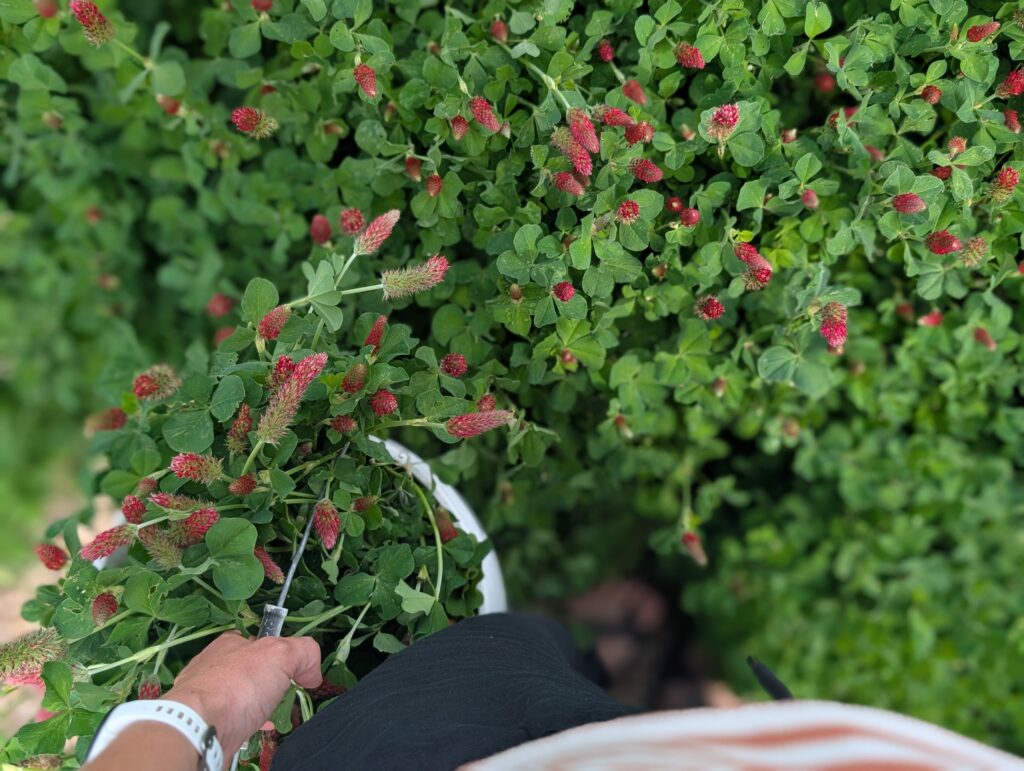
If you’re questioning the extra step or extra cost of planting cover crops, you may not have realized all that they can do for your garden. Cover crops take any bare space and gather nitrogen, suppress weeds, attract beneficial insects and build the soil. In general, if garden space is left bare, it is more likely to grow weeds, erode or lose its moisture and bacterial content over time. All of these problems lead to more time, more expenses and more work for the gardener.
How Do Cover Crops Work in a Home Garden?
Cover crops are great to have on hand for all the blank spots or in between seasons in a garden space. Whether you are gardening a big or small space, there is always a time when a garden crop is being removed and a blank space is left behind. Ideally, you are always prepared and have the next vegetable for that space ready to plant at harvest, but when there are gaps, a cover crop can fill it in.
There are also vegetables and flowers that feed heavily on soil, like nitrogen hungry tomatoes and sunflowers. Planting a cover crop in the space after they are removed can assist in replenishing the nutrients removed by the heavy feeder.
Can You Use Cover Crops in Raised Beds?
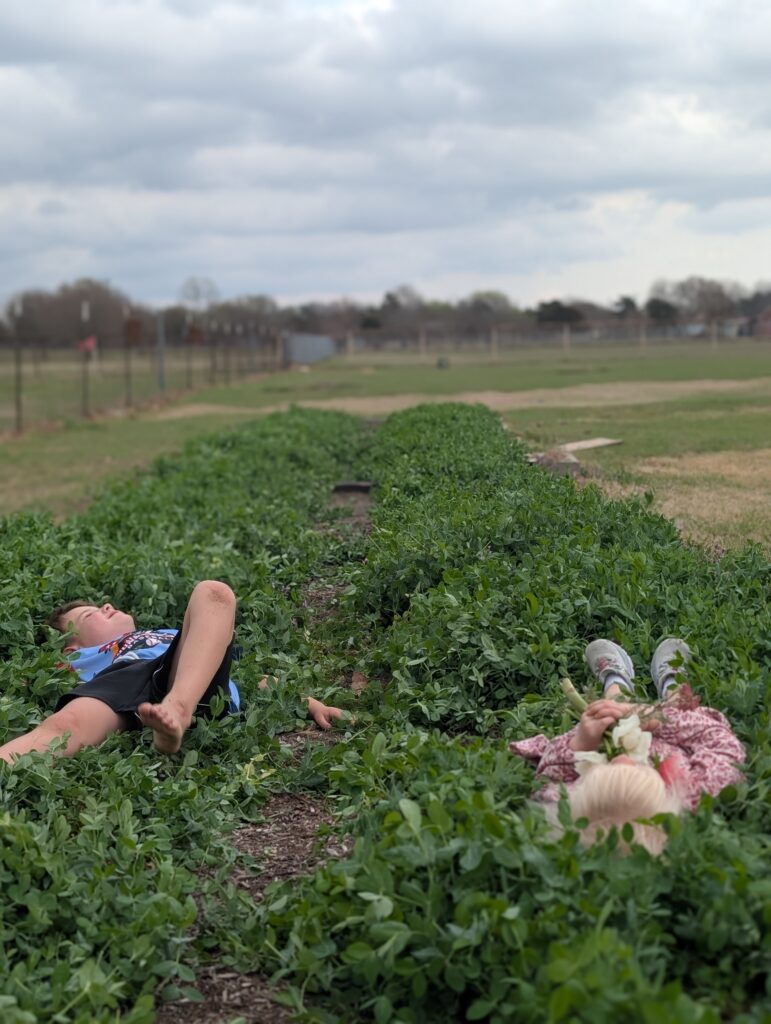
Yes – if fact, raised beds often lose their fertility over time due to watering and compaction. Planting a cover crop in late summer for overwintering can benefit the raised bed’s soil health with very little effort.
Types of Cover Crops
There are several types of cover crops with different uses in the garden:
- For Beneficial Insects: the plant provides essential resources for beneficial insects like pollen, nectar, safe nesting habitats, and more.
Examples: Clover, sun hemp, buckwheat, sweet alyssum, phacelia, yellow mustard, sunflowers, hairy vetch
- For Green Manure (or Soil Building): the plant is meant to be chopped down and turned into the soil where rotting plant material can feed the microbiome.
Examples: Clover, hemp, millet, peas, oats, winter rye
- For Nitrogen Fixation: the plant works with soil bacteria to pull usable nitrogen from the air into the soil.
Examples: Clover, sunn hemp, peas, oats, hairy vetch
- For Forage: the plant protects and builds the soil while providing protein, energy and fiber for grazing animals.
Examples: Clover, Millet, Peas, Oats, Winter rye
- For Weed Suppression (living mulch): the plant grows quickly and thickly which blocks sunlight and steals nutrition from weeds.
Examples: Clover, millet, buckwheat, winter rye, oats, phacelia, hairy vetch, yellow mustard

How to Terminate Cover Crops
Once a cover crop has fully matured, the termination of the cover crop becomes key. Legumes that have fixed nitrogen should not be pulled because the nitrogen nodules on the roots need to remain in the soil. Living mulch should not be foraged so that the plant material has a chance to break down on or in the soil. The method of termination matters.
For most cover crops, it’s important to terminate the plants before they form flowers or drop seeds. With some crops, winter frosts will assist with termination, but timing of planting becomes more of a factor. Many of the cover crops can be terminated in multiple ways to provide more than one use (ie. mowing legumes and leaving them on the soil as green manure).
There are several ways to terminate cover crops based on their goal:
- Cover Crops That Winter Kill: sun hemp, buckwheat, sunflowers
- Cover Crops You Can Mow: crimson clover, sun hemp, buckwheat, sweet alyssum, phacelia, yellow mustard, sunflowers, hairy vetch
- Cover Crops That Can Be Roller Crimped: legumes and annual grasses, hairy vetch, crimson clover (at full bloom), sun hemp
- Cover Crops to Incorporate into the Soil: yellow mustard, buckwheat, sun hemp, phacelia, sweet alyssum.
- Cover Crops That Livestock Can Graze: crimson clover, buckwheat, sunflowers
Can You Mix Cover Crops?
Yes! This is the best way to get multiuse from cover crops, even in a small space. We should think of the mix as a mix of goals, and truly a mix of plants. Something quick growing for weed suppression, something nitrogen fixing, something hearty for living mulch or green manure. Most gardeners reduce each species to 30–60% of its solo seeding rate depending on how dominant they want each crop to be.
For example:
Winter Rye (2 lbs) + Crimson Clover (0.75 lb) + Hairy Vetch (1.5 lbs) per 1,000 sq ft
Winter Rye (2 lbs) + Oats (1.5 lbs) + Field Peas (2 lbs)
How Much Seed Do I Need?
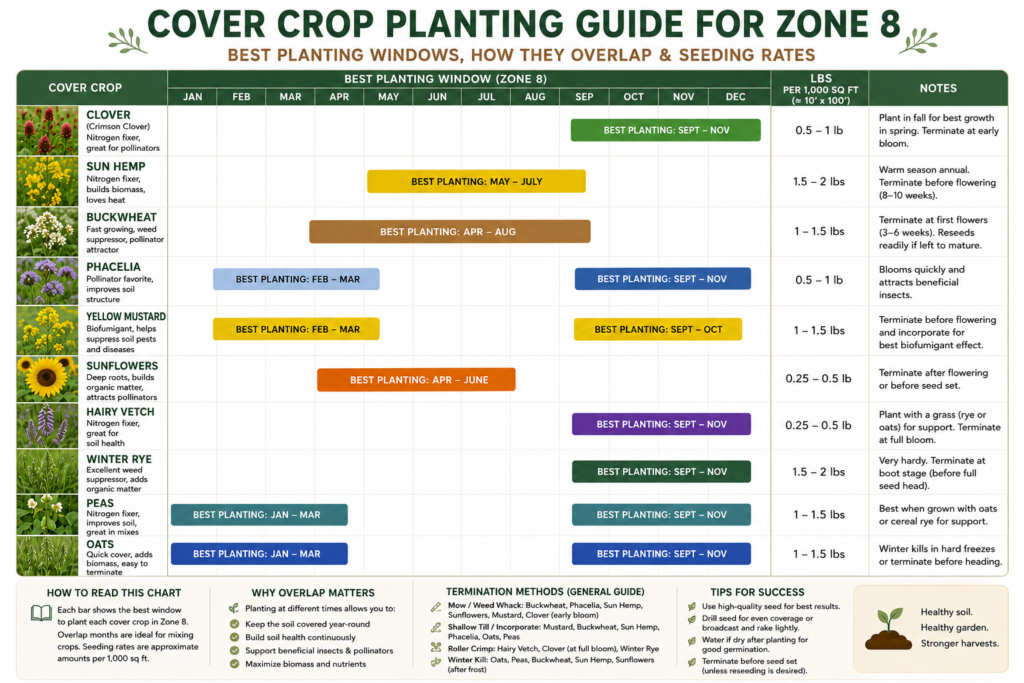
Based on seed size, plant size and growing space, you can use the following data to determine how much seed is needed. For a mix, remember to lower your broadcast rate by at least 30% based on preferred crop dominance.
| Cover Crop | Broadcast Rate (lbs per 1,000 sq ft) |
| Crimson Clover | 1.0–1.5 lbs |
| Sun Hemp | 2–3 lbs |
| Buckwheat | 2–3 lbs |
| Phacelia | 0.2–0.4 lbs (3–6 oz) |
| Yellow Mustard | 0.3–0.6 lbs (5–10 oz) |
| Sunflowers | 0.5–1 lb |
| Hairy Vetch | 2.5–4 lbs |
| Winter Rye (Cereal Rye) | 3–4 lbs |
| Field Peas (Austrian Winter Peas) | 4–6 lbs |
| Oats | 2.5–4 lbs |
Where to Buy Cover Crop Seed?
Here are some of our favorite places to source cover crop in bulk: (not sponsored)
Johnny Seeds: high quality seed with very good germination rates, easy to add on with other high quality veggies and flower packets
Hoss Seeds: lower cost seed with good germination, good for making custom mixes
Outside Pride: excellent educational resource as well as fairly priced seeds for 1 lb bags.
Build Healthier Soil with Cover Crops
Whether you’re growing vegetables in raised beds, managing a backyard garden, or expanding a homestead, cover crops are one of the easiest and most effective ways to improve your soil naturally. From fixing nitrogen and suppressing weeds to preventing erosion and attracting beneficial insects, cover crops continue working long after your harvest is finished. By choosing the right species, planting at the right time, and terminating them properly, you’ll build healthier soil, reduce garden maintenance, and create a more productive growing space season after season. Start with one cover crop or experiment with a custom mix; your soil will reward you for years to come.
Leave a Reply